“You can fool some of the people all of the time, and all of the people some of the time, but you cannot fool all of the people all of the time.” –Abraham Lincoln
What is a phishing email?
Are you sure that email from UPS is actually from UPS? (Or Costco, BestBuy, or the myriad of unsolicited emails you receive every day?) Companies and individuals are often targeted by cybercriminals via emails designed to look like they came from a legitimate bank, government agency, or organisation. In these emails, the sender asks recipients to click on a link that takes them to a page where they will confirm personal data, account information, etc.
What is phishing?
This technique is called phishing, and it’s a way hackers con you into providing your personal information or account data. Once your info is obtained, hackers create new user credentials or install malware (such as backdoors) into your system to steal sensitive data.
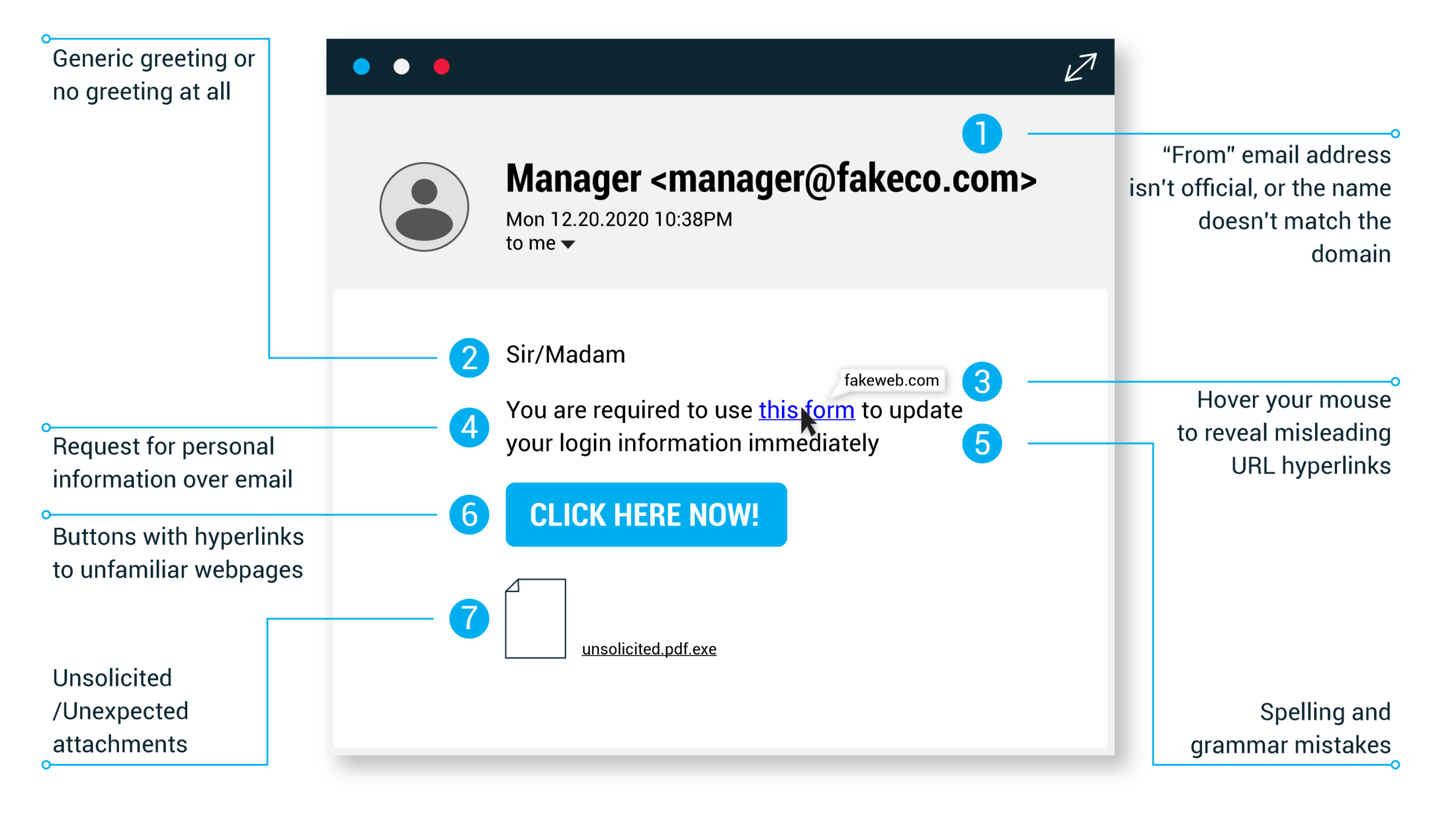
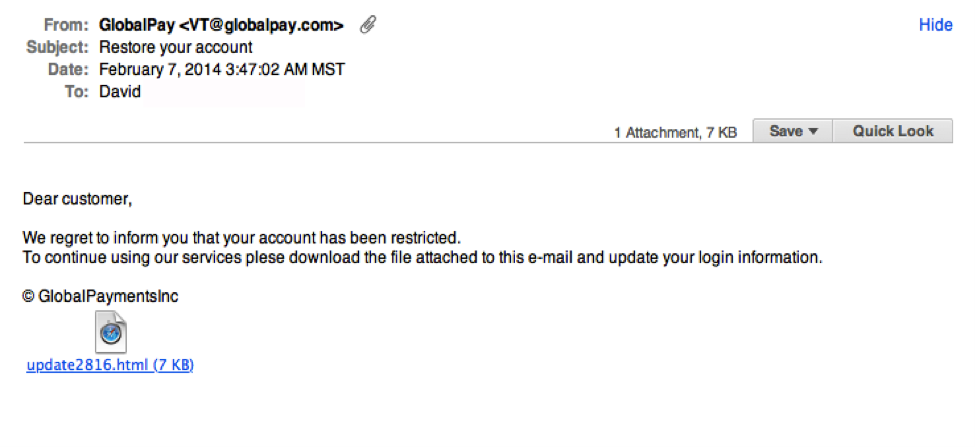
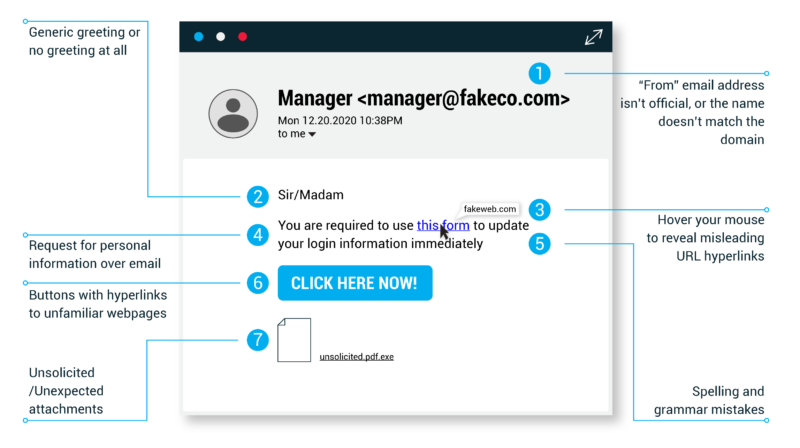
Phishing emails today rarely begin with, “Salutations from the son of the deposed Prince of Nigeria…” and it’s becoming increasingly difficult to distinguish a fake email from a verified one. But, most have subtle hints of their scammy nature. Here are seven email phishing examples to help you recognize a malicious email and maintain email security.
What is a common indicator of a phishing attack?
Requests for personal information, generic greetings or lack of greetings, misspellings, unofficial “from” email addresses, unfamiliar webpages, and misleading hyperlinks are the most common indicators of a phishing attack.
In the next article: Email Phishing Examples